Śrī Aurobindo Ghose

“The spiritual life (adhyatma-jivana), the religious life (dharma-jivana) and the ordinary human life of which morality is a part are three quite different things and one must know which one desires and not confuse the three together.

“The ordinary life is that of the average human consciousness separated from its own true self and from the Divine and led by the common habits of the mind, life and body which are the laws of the Ignorance.

“The religious life is a movement of the same ignorant human consciousness, turning or trying to turn away from the earth towards the Divine, but as yet without knowledge and led by the dogmatic tenets and rules of some sect or creed which claims to have found the way out of the bonds of the earth-consciousness into some beatific Beyond. The religious life may be the first approach to the spiritual, but very often it is only a turning about in a round of rites, ceremonies and practices or set ideas and forms without any issue.

“The spiritual life, on the contrary, proceeds directly by a change of consciousness, a change from the ordinary consciousness, ignorant and separated from its true self and from God, to a greater consciousness in which one finds one’s true being and comes first into direct and living contact and then into union with the Divine. For the spiritual seeker this change of consciousness is the one thing he seeks and nothing else matters.”

Born in Calcutta India in 1872 and educated in England from the age of 7-21, upon his return to India, Aurobindo worked in civil service, later teaching at Baroda College, and becoming involved in the Indian Nationalist Movement. During 1908-09, he is imprisoned for an Alipore Bomb Case, from which he is later acquitted. In jail, often in solitary confinement, he hears a voice, “Trust in me” to which he responds by letting go of politics and devoting himself to the practices of yoga. In 1909, he offers a speech on the truth of Hindu religion. In 1910, facing another arrest warrant, he hears and follows instruction to go to Pondicherry. From 1914-1921, he publishes Arya, a journal on Indian culture, including translations of the Upanishads and other scriptures. November 24, 1926 is marked as the day of Siddhi, the day Aurobindo experiences bringing down the supramental/ the descent of Truth-Consciousness/ Overmind, after which he goes into seclusion at the Pondicherry ashram, spending 12 hours a day writing to disciples and 8 hours a day walking. On December 5, 1950, in a free and united India, he “withdraws” from his body. I have heard it said, “Śrī Aurobindo’s aura was so full of peace that even during a raging cyclone neither wind nor rain entered into his Room.”

Mutual Accountability Group

Our setting: We meet monthly in a mutual accountability group. We are on Zoom across four time zones. We’ve been meeting for about a decade now, including at a common geographical space when circumstances allow.

Nancy: … What do you need?

Viv: I just need to feel fulfilled. How that happens can change from day to day and moment to moment. I have no outcome in mind except to grow my edges.

Lola: What does “grow [your] edges mean”?

Viv: Eating a new pastry. Using a bath bomb. Looking at the sky. Creating. I’ve made art in my journal before but not made art of my journal before, particularly about spiritual accountability.

Lola: Why spiritual accountability?

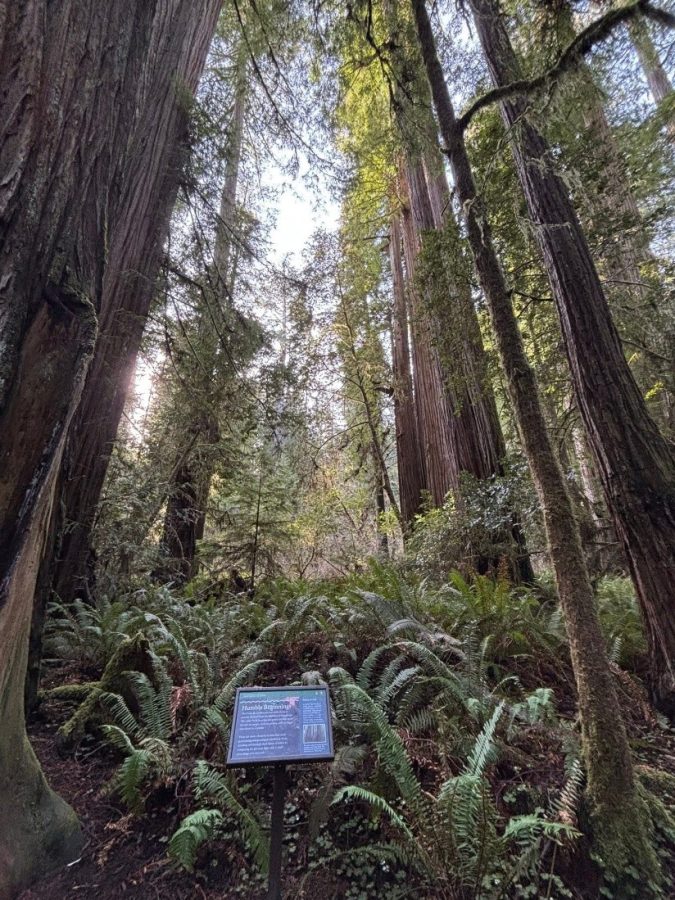
Viv: It has been an interest of mine for a long time. I have something to offer and to learn. Lola’s belief that humanity needs to mature is linked to it. I believe it can help make the leap to a bigger perspective, a broadening of boundaries. For me, moving from a mindset of resource extraction – like seeing a cow and thinking hamburger – to a kindredness – one that sees raven in a congregation of which I am a member and redwoods as tree people…

This process offers us accompaniment, a welcome feeling when seeking to live outside of dominant society’s constraints. It, also, holds us accountable to that to which we wish to be faithful and committed.

In the excerpt above, for example, I was invited to share a substantive shift in how I have been living – from a more goal-oriented, project basis to one that attunes more wholly to life around me and experiences myself as a part of that flow. In the process, I received a greater awareness of this strange, new, more frequent sense of communion and, in trying to offer others a glimpse into that experience, came to acknowledge, accept, and honor it a bit more fully myself.

Bottom Feeder in the Stream

A mystical experience in the form of a vision shared by Lola Georg.
This vision was revealed during silent meditation in a group setting.

In my mind’s eye, I see the woods on a bright, sunny day. I walk to the edge of a stream; a babbling brook that makes the sweetest music. Suddenly, I am under the water, swimming like a fish. The light from above streaks through the water and bounces off the rocks on the bottom of the steam, making them twinkle. All is clear and bright as I swim gracefully and easily through the water.

Up ahead, I spot a bottom feeder swimming over the silky mud nestled between the rocks. A catfish-like creature that skims the bottom of the stream; stirring up the muck. The bottom feeder notices me and becomes very agitated, so much so, that the silt on the bottom of the stream begins to rise and muddies the waters. The more agitated the bottom feeder becomes, the more muck there is and the more opaque the water becomes. I can’t see any longer as I am surrounded by muck and mud.

My first instinct is to swim away, to get away from the bottom feeder and find a clearer part of the stream. Instead, I find myself having compassion for the bottom feeder. After all, the bottom feeder eats the muck as part of the ecosystem. It needs to move to breathe and to stir up the silt to eat. With my compassion for accepting it as it is, the bottom feeder becomes less agitated and settles down, and in doing so, the muck also settles until the clarity of the stream is restored, and the sun illuminates the water once again.


Lola’s Reflection:
As I sat with this vision, I realized that the sun shines the same brightness no mater how murky the waters. It is the bottom feeder, or my own ego, that brings murkiness to the water, particularly when I get upset or agitated. When I have compassion for myself and others, then the murkiness can settle back to the bottom, enabling the light to shine clearly. I wonder, in what ways do I muddy the waters, and perhaps deliberately? Sometimes it is appropriate to agitate things, to challenge the status quo. However, in doing so, do I remain compassionate so that the silt settles? Or do I continue to agitate?

On the other hand, regardless of how muddy things may seem at any given point in time, the light is still shining. It is interesting to note in this vision that the light is steady, strong, and unwavering, regardless of the murky environment. I am reminded of a trip on an airplane. It was storming outside, dark and cloudy. But as the plane ascended above the clouds, the sun was shining clear and bright. Just because it seemed dark and stormy did not mean that the sun was not shining. In rising above the storm clouds, above the turmoil, I can witness the light, pure and strong.

Zooming Way In and Out

We had been silently attending to the sensations of our body for hour upon hour every day, noticing them and observing how they changed, refraining from eye contact and speaking, except to ask questions of the teacher in brief twice daily, private sessions. We had pledged to not smoke, drink alcohol, take drugs, be in contact with people outside the center, read, write, or eat anything but what was offered in the dining hall.

In the Vermont center, newly constructed meditation “cells” were available for us to use and on day 7, I was able to avail myself of one for a short time. I entered and closed the door. Darkness and quiet. The thought arose, “This is a just closet.” I laughed inwardly and dismissed the thought, choosing to take on the assignment given to us to seek to feel sensations inside our body. For some reason not known to me, I imagined a huge comb in front of me moving toward my body. As the comb approached my abdomen, I had the sense of my body cells parting to afford the tines of the comb to enter between them and I felt lifted upward so very, very, very high above the cell. I received the instantaneous awareness of what was now so very, very, very far below appearing now to be one continuous object and a knowing that only perspective separated me from every other thing that existed. As quickly as I had been raised up, I was back in my body in the dark, quiet cell.

Viv’s Reflection:

But, in that moment, something fundamental-to-my-life-up-until-that-point was shattered by the cells of my body parting for that comb and the telescopic ascension that followed. In truth, I lack the words or wisdom to relate or fully fathom this mystical experience, especially given that I had felt strait-jacketed by the culture of this Vipassana technique for 7 days.

Yet, here I am 21 years later seeking to plumb the lesson of union and separateness offered there in that “closet” so that I might live in and from it.

Contemplative Photography

Over the past decade, since a workshop in Contemplative Photography, I’ve continued the practice of

  • slowing down,
  • connecting with the present moment,
  • actively meditating on some visual stimuli, and
  • exploring how that image wishes to present itself in the camera’s frame.

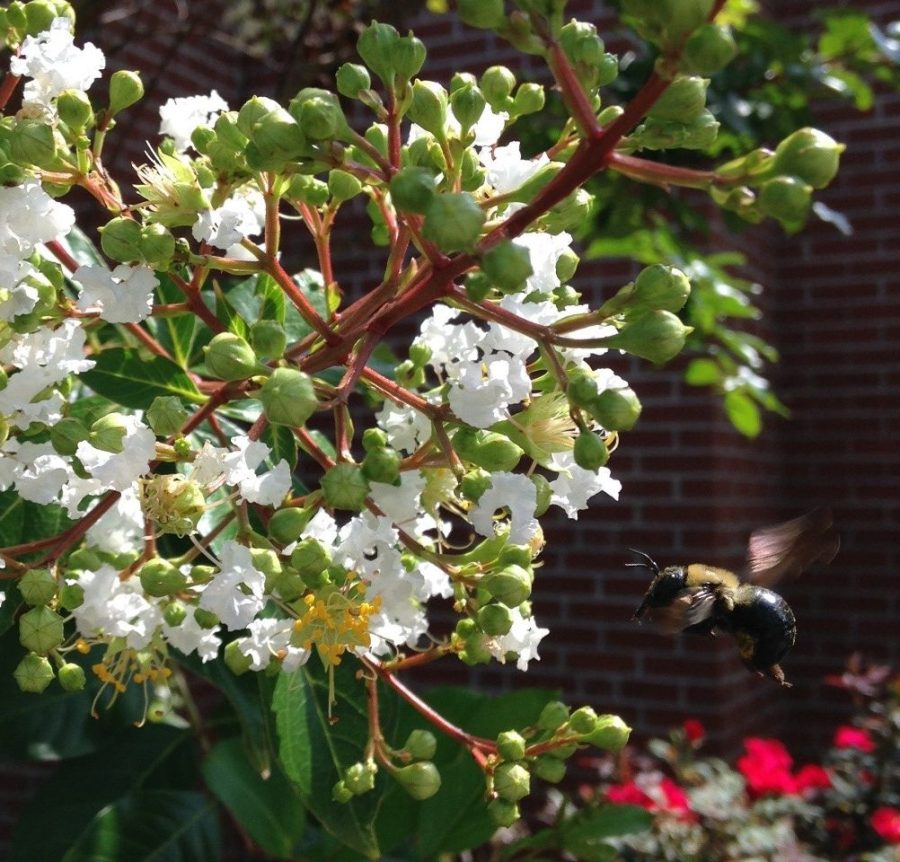
Practicing contemplative photography allows me to explore the world from a deeper, more aware gaze. It frees me from the pressure to capture the image and, instead, receive the image that reveals itself to me, that captures me. It has increasingly allowed me to explore how light, texture, emptiness, and color are key elements in a visual narrative.

It helps me pause, reduce stress, increase my attention to receive that which may not be initially seen, find joy in the act of looking deeply, and share the beauty that surrounds us daily. This was particularly healing during the COVID pandemic when many people were isolating and continues to allow me to perceive and share the beauty my travels offer.

Might you delight to explore photography as a way to pause, feel, and get to know yourself and the world around us more fully? If your answer is yes, welcome to this practice.

Fences on the Ocean

A mystical experience in the form of a vision shared by Lola Georg.
This vision was revealed during silent meditation in a group setting.

In my mind’s eye, I see an ocean, flat against the horizon. There is no land in sight. The sun is shining brilliantly. A slight breeze causes ripples to form on the ocean. Strangely, a fence surrounds each ripple, and these fences are bobbing on the ocean. Some fences are low to the water, like a small garden fence around the edge of a flowerbed. Others are high, tall brick walls. There is a hedge fence; a split-rail fence; a wrought-iron fence; a barbed-wire fence; a white-picket fence; a stonewall fence. Some fences have gates; others watchtowers. A few of the gates are open, but most of them are closed. Some are locked. Thousands and thousands of fences, each surrounding individual ocean ripples, are floating on the surface of the ocean.

It then occurs to me; how ludicrous it is for one ripple to think it is separate from the rest of the ocean? How could a ripple think of itself without the ocean? The ocean is ripples and the ripples are the ocean. I see that the ripples are like people and the fences are like our bodies, desperately trying to keep ourselves separate from each other, but ultimately, we are joined as one.

Lola’s Reflection:
I think of water as a metaphoric symbol for spirit. I think of the ripples in this vision as representing the divine within each person. Each person as a ripple cannot exist without the ocean or spirit. I think about what causes ripples on the ocean. The answer, of course, is the wind. The wind can be representative of the breath of life in each person. Winds can be calming, as a cool breeze, or violent as a fierce storm. Winds can change, but they are always in motion, as life itself is in motion.

I found it fun and a bit funny to think of fences (or defenses) as separating me from other people. What kind of fence do I have? Somedays it feels like a garden hedge, and other days an impenetrable wall of brambles. When is the gate to my heart open? Or is it slammed shut and locked with a deadbolt? How do i respond to the winds of change blowing through my defenses? Something more to ponder.

Harriet Tubman

“If you’re tired, keep going. If you’re scared, keep going. If you’re hungry, keep going. If you want to taste freedom, keep going” – Harriet Tubman

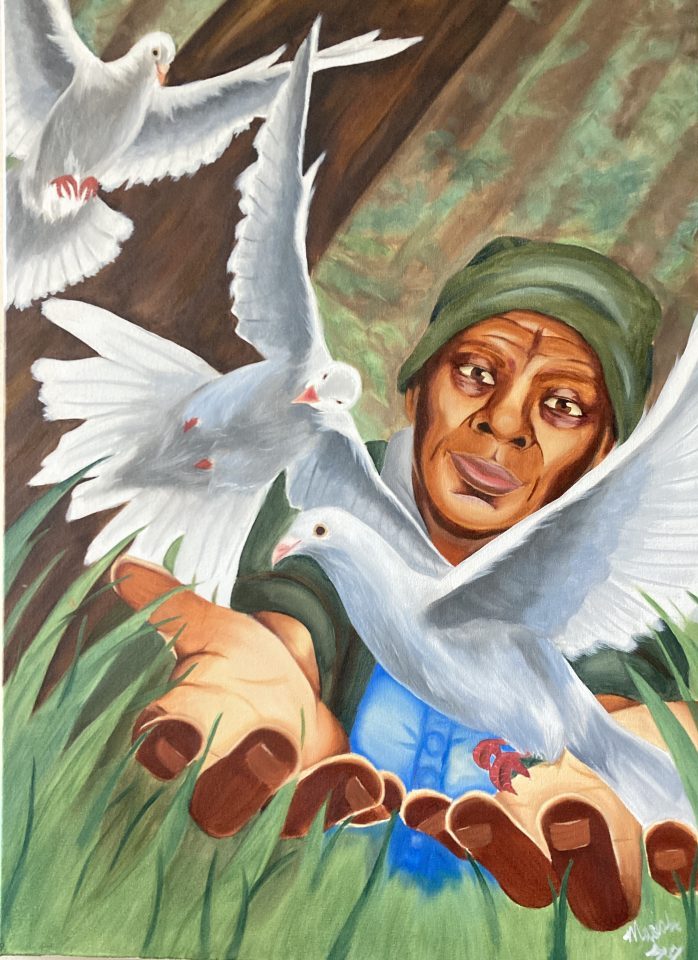
It is easy to think of Harriet Tubman as a freedom fighter, but as a public mystic? Therese Taylor-Stinson writes about Harriet as a mystic in this book, expounding on the visions that Harriet experienced during her life. But more than mere visions, Harriet had a strong connection with the divine. She called upon her faith in times of danger and challenge. And, she experienced mystical events that kept pursuers at bay during her numerous trips bringing friends and family to freedom. Interwoven with Harriet’s mystical experiences, Therese describes her own mystical experiences and the impact those experiences on her life.

The video below (50 minutes) is an interview with Therese as she talks about the book, about Harriet, and about mystical experience. Enjoy!

Prayer

“It is better in prayer to have a heart without words than words without heart.” – Mahatma Gandhi

“It has been said that mysticism is the antidote to fundamentalism; I think we can expand that to say that contemplation is an antidote to scapegoating. Jesus taught his disciples to refrain from judging others – and while I do believe that thoughtful discernment is both psychologically and spiritually healthy; I see the mandate to suspend judgment as an invitation to meet people where they are, to listen to their stories, and to respond with compassion and care, rather than fear, aggression, or exclusion. So, the practice of contemplative forms of prayer has helped me to love myself better, to love God better, and to love my neighbor better.” – Carl McColman

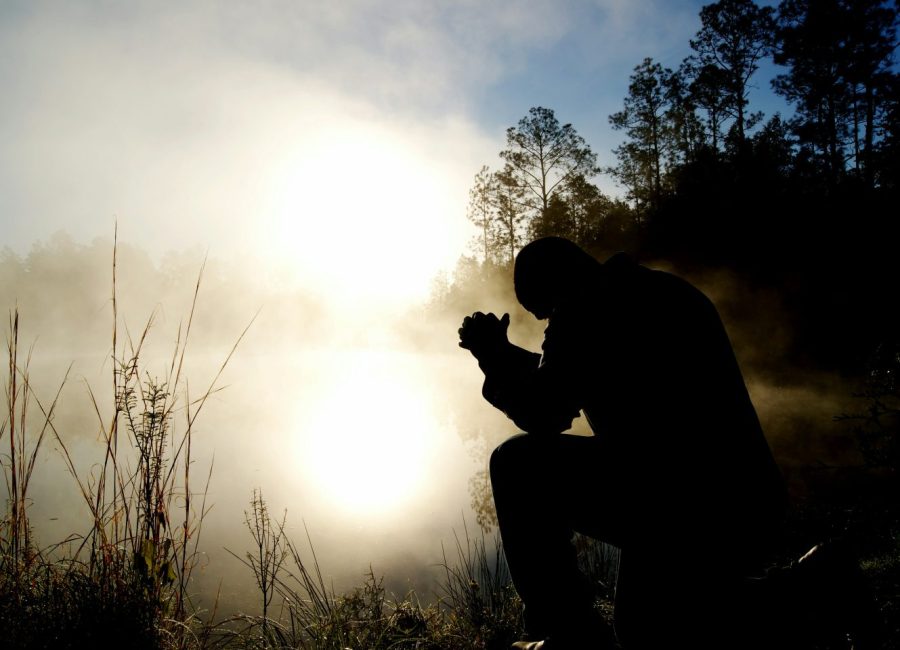
Prayer is a communication vehicle between the Creator and creation, representing dialogue in relationship. Prayer doesn’t necessarily need words; but words, songs, chants, laments, or silence can all be elements of prayer. Sometimes we pray in groups, and at other times prayer is a solitary activity. Prayers can be requests for healing, gratitude for current circumstances, or acts of worship. An active prayer life has been an element of mystics throughout the ages; however, prayer is not necessary for mystical experience to materialize.

Meditation

“We can make our minds so like still water that beings gather about us that they may see, it may be, their own images, and so live for a moment with a clearer, perhaps even with a fiercer life because of our quiet.”
― William Butler Yeats

Silence

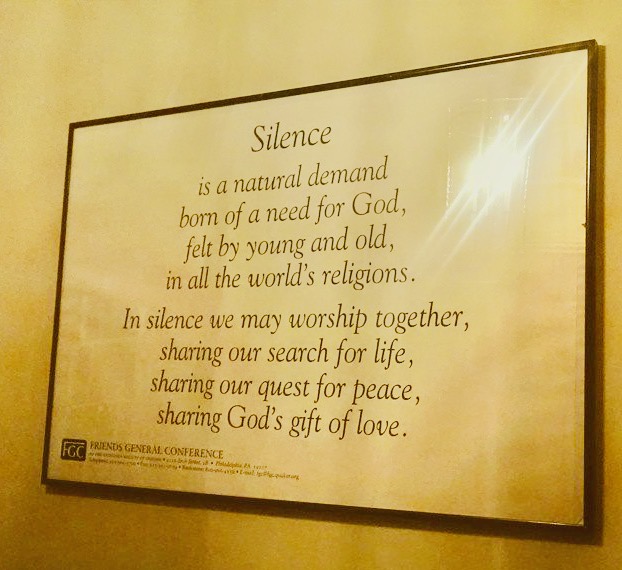
Silence is a practice, and an art. It is an act of restraint, and a method for learning to communicate without speaking. Silence offers a moment of respite, and perhaps, a sense of peace.

Practicing extended periods of silence, as in meditation or prayer, can be a doorway to mystical experience. Silence is often a prelude to a receptive state of mind; shifting perspective and awareness.