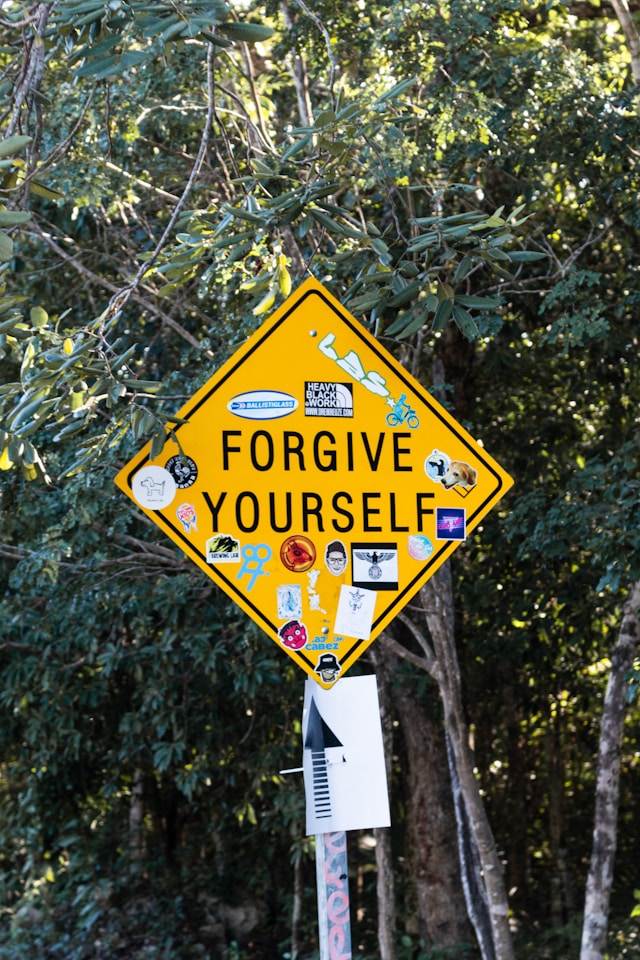
“Forgiveness is not an occasional act; it is a permanent attitude.” – Martin Luther King, Jr.
“Forgiveness is a beautiful idea until we have to practice it.” — C.S. Lewis
“When you forgive, you in no way change the past – but you sure do change the future.” – Bernard Meltzer
My therapist once said to me, that forgiveness is like putting someone in a cage. Once put in the cage, they must be watched by a guard to ensure that they do not escape. I can stand guard as long as I want, but if I truly want to be free – to be liberated, I have to relinquish the role of guard, for it also keeps me chained to the cage. Forgiveness, therefore, becomes my release from the past, in order to liberate the future.
Forgiveness can be a difficult practice, extremely difficult. For decades, I have had a practice of attempting to forgive the harms of the day as I drift off to sleep. Starting with the harms of the day, enabled me to slowly forgive the bigger traumas in my life. Over time, I’ve become better at forgiving myself, other people, and my sense of injustice that the world is not as I believe it should be.
In the news of late, there has been talk of preemptive strikes, where one nation believes it is justified in attacking another nation. The idea is to use violence as a deterrent to violence. In this context I was thinking about the opposite of a preemptive strike, and words from beyond entered my consciousness with the phrase, ‘preemptive forgiveness.’
I began to explore the idea of ‘preemptive forgiveness‘, and have been practicing it for the last few years in two contexts, with groups, and with individual people.
Suppose I have a meeting that I dread, or an event I feel obligated to attend. Perhaps I have a sports team I root for, legislation I like to see passed, or an upcoming holiday gathering. I have practiced forgiveness long enough to know that, no matter what happens with this group, tonight I will be offering forgiveness as I drift off to sleep. With the practice of preemptive forgiveness in mind, I can forgive before anything happens. This has changed my experience of one from leaving angry or irritated, to entering with curiosity. What will happen here that I have already forgiven? What irritant will surface? How many irritations will there be? I must say that I have found delight in playing this game of discovery. There it is! The first thing from this meeting that I have already forgiven! How many more will there be?
In a similar way, I practice preemptive forgiveness with people. What might she say during this phone call, that I will forgive later tonight? How might he treat me, that while rude, is also completely forgivable? How can they be so self absorbed, that they do not notice how their actions affected me? I could just as easily forgive before I engage, and shorten my end-of-day forgiveness list, which has been a pleasant side effect. In a similar way, preemptive forgiveness in relation to my partner has been a healing practice. A prayer of preemptive forgiveness in the morning as I rise – knowing full well that no matter what transpires today, I will forgive her tonight – allows me to have a sense of humor about life. “Oh! There it is! She said the thing, she did the thing, that I have already forgiven her for.” She knows that I engage with preemptive forgiveness, so these moments have gone from irritations and relational strain, to moments of humor and warm affection.
Of course, forgiveness and preemptive forgiveness are practices, more easily said than done. Forgiveness can be hard. Preemptive forgiveness can be a fun game. However, I am no longer interested in guarding cages. But the practice of forgiving, over and over again, will be with me for all of the days to come.
“Father forgive them, for they know not what they do.” – Jesus, Luke 23:34
“Forgive what was, Accept what is, Love what comes.” – Lola Georg
Photo by Simon HUMLER on Unsplash
 mystical friend
The C.S. Lewis quote really sets up the whole tension perfectly. There’s a big difference between accepting forgiveness as a concept and actually doing it when you’re standing in the wreckage of something real. Your therapist’s framing sounds like it gets at something important, that forgiveness isn’t about the other person deserving it but about freeing yourself from carrying something that was never yours to carry forever. Really thoughtful reflection here.
LikeLiked by 1 person