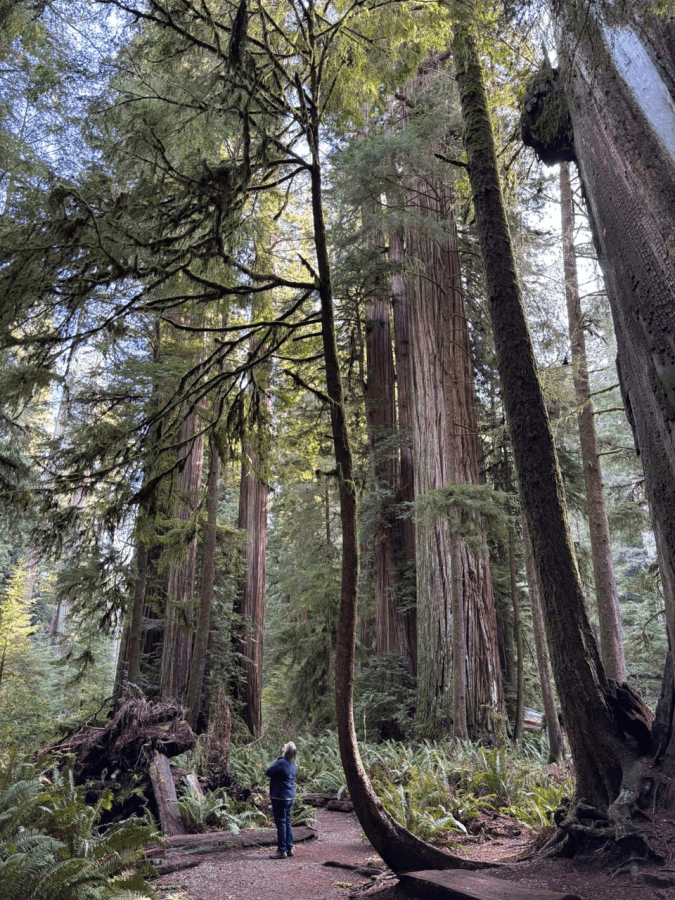
Forest bathing is the practice of immersing ourselves in natural settings, particularly but not exclusively, forests. It involves slowing down and paying attention to our natural surroundings with our full complement of bodily senses: smell, sight, hearing, touch, and taste. Here’s how:
1. Find a location in nature
The ideal place is a quiet area surrounded by trees. Environments with greater tree cover and natural sounds may be especially effective at reducing human stress and mental fatigue. But any natural space, including urban parks, is suitable.
2. Set aside time
Forest bathing and spending more time in nature has been shown to contribute great benefits. Although two to six hours is considered ideal, as little as 15 minutes in a natural setting can help reduce stress and anxiety.
3. Aim to reduce your heart rate
Forest bathing is most effective when you move at a slow and gentle pace. Slower movement contributes to lower heart rate and blood pressure, and helps the nervous system settle. Instead of approaching this time as exercise, move slowly to invite your body to shift out of fight/flight mode into rest and recovery.
4. Engage all your senses
Using all five of your physical senses helps deepen the restorative effects of forest bathing. You might ask yourself: What scents do I smell? What sounds can I hear? What textures do I feel beneath my feet or fingertips? In addition to what we see, paying attention to sounds, textures, and smells helps root the body and mind more fully in the present moment.
5. Take a moment to meditate
Pausing can help augment and complete the forest bathing experience. Find a quiet place to sit and practice simple meditation, such as gentle breathing exercises, journaling, self-affirmations, or quiet observation to allow your mind to slow and settle. Even a few minutes of stillness in nature can ease tension and deepen a sense of calm.
More about Forest Bathing
Forest bathing can be practiced individually or in the company of others who are open to engaging the practice together, including people of all ages.
This form of “nature therapy” offers a wide range of benefits for our physical, emotional, and spiritual selves, including decreasing undue stress and potential burnout and boosting your immune system.
This is an abbreviated description of three key steps in forest bathing. A 16 minute NPR episode tells more about the practice. If you wish to know more about the physiological and psychological effects of forest bathing, known as Shinrin-Yoku in Japan, see this review of scientific studies on empirical research. And, if you can’t get out to a forest, this Redwood Forest Soundscape video can offer the sound and sight experience.
Edward O. Wilson introduced and popularized human’s “innate tendency to focus on life and lifelike processes,” known as biophilia in his book Biophilia (1984). In it, he argued that “to explore and affiliate with life is a deep and complicated process in mental development. To an extent still undervalued in philosophy and religion, our existence depends on this propensity, our spirit is woven from it, hope rises on its currents.”
 mystical friend
once, while forest bathing, I wrote a poem called Recipe, by Lola Georg
Recipe
wander into the woods
on a quiet autumn day
find a sitting spot
sit for a spell
listen to the rustling of the leaves
feel the breeze
(woodpecker some distance away
bird chirping closer by)
be still enough for little ones to gather round
(searching for seeds)
look up
look down
look around
observe
breathe
close the eyes
touch the sacred
face the sun
open the eyes
notice in the corner of vision
a leaf swirling round
(crimsom floating in a sunbeam
drifting ever downwards)
let the gaze join
floating to the forest floor
tap
– a recipe for the sound of one leaf landing
https://lolageorg.com/2025/10/21/recipe/
LikeLike