Taizé pronounced (teh-ZAY) is used to describe both an ecumenical community in France and its style of sung prayer and chants. Amidst the multicultural assemblies of global pilgrims at the Community of Taizé in France, a new kind of music developed to fit these global gatherings: brief sung texts, often in Latin, set to simple melodies with verses in several vernacular languages.
A Taizé hour can be a marvelous way to experience a peaceful immersion in the Holy. Taizé chants are sung over and over. The repetition is a means for the words to enter one’s being. The words and the feelings one has when singing them, preferably in the company of others, can become the song that continues in one’s mind, heart, and body even after one has stopped singing.
Soft lighting often welcomes the worshippers as they gather to sing together. Some experience the practice of sung prayer “as waves across water.” Intermixed with the sung prayer are periods of silent reflection to absorb what has been sung, heard, read, and seen. Icons are sometimes present for visual meditation, bringing to one’s eyes what words bring to one’s hearing.
For me, the feeling generated by singing this way in these settings, also, soothes my vagus nerve, which runs in humans from the brainstem to the digestive system. The effect is a bidirectional communication of stress relief with my parasympathetic (rest and digest) bodily organs. Science says this helps regulate my heart rate, digestion, breathing, and immune response.
My experience of Taizé was an hour mid-week at St. John the Evangelist in Philadelphia PA. Engaging Taizé with other people, opens my heart to them in ways that bring tears to my eyes, that acknowledge our shared humanity, that give me renewed hope for the world in which we live. This 6 minute video offers glimpses into a large Taizé gathering of young adults in Europe.
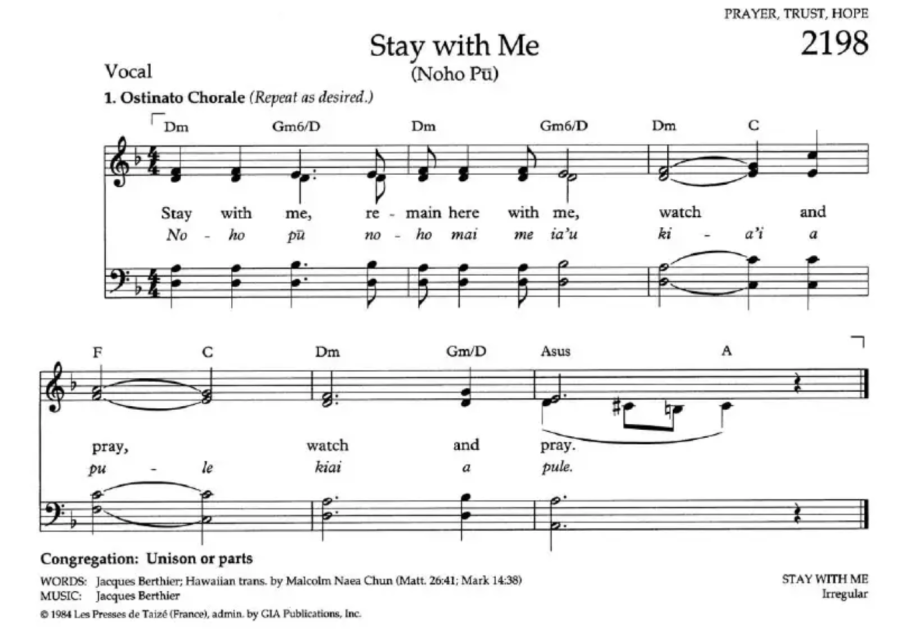
This video offers Christian images and audio of one chant with the lyrics “Stay with me, remain here with me, watch and pray” and here is a recording of 65 minutes of evening prayer in Taizé, and the songs for the celebration of the Eucharist recorded at Taizé in 1999. Song sheets, melodies, and lyrics are available at the Taizé community’s archives.
 mystical friend